
NEWS THAT DOESN'T MAKE THE NEWS
Arriving in San Francisco...
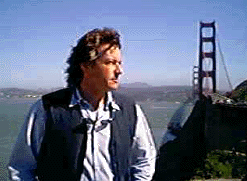 ...is always a rush, but cruising over the Golden Gate with the top down and my first book appearing in the stores up ahead is a thrill I'll never forget. Over in Berkeley, RISK AND REDEMPTION is at Cody's Books (the store situated literally at the crossroads of the 60's free speech movement and still an important force in independent expression today) as well as at Barnes & Noble a few blocks away. In San Francisco itself, the Barnes & Noble location at Fisherman's Wharf placed the book on their shelves just the other day, and at the last minute one of the city's fine independents, A Clean Well-Lighted Place for Books, invited me to join two other writers in a panel about censorship.
About thirty people turned out at the store opposite Opera Square to meet Peter Phillips, who along with Project Censored has written CENSORED 1997: The News that Didn't Make the News. It's a fascinating study of the most glaring examples of stories that were blocked from the airwaves and news pages because of corporate and political pressures. For more than 20 years, Project Censored has functioned as an independent media ombudsman for Americans. From his base at Sonoma State University, Professor Phillips and the project team annually scan the alternate and mainstream media to detect the alarming patterns of editorial oversight and outright exclusion that compromises the nation's information culture. They identify the top 25 stories that circulate in the underground or alternate media -- but which go unreported by major newspapers, radio and TV news programs -- then they analyze the reasons why.
Censorship, says Peter, is routinely practiced by the media giants for public relations, marketing and ideological reasons. One example: how Shell Oil and Nigeria's military have worked to suffocate resistance to human rights abuses in that country, where areas like the tribal homeland of the Ogoni people have been desolated by the oil industry. Danny Kennedy of Project Underground joined Peter to provide further detail: his group has extensively documented the case against the Nigerian regime and Big Oil in their annual report. As Peter and Danny's presentations made clear, this and too many other stories have been kept from the attention of most Americans.
Why worry about that ? For one thing, this kind of censorship leaves Americans at a competitive disadvantage. People in Britain and the rest of Europe, for instance, see and read about the Nigerian story in the mainstream media, not just by way of the alternate or underground press. Now if you think you can get by in your own home town without knowing about judicial execution and ecological disaster on the other side of the world, just thumb through Peter Phillips' excellent book to learn about all the other issues very much closer to home that go unreported for similar reasons of corporate expediency. Censorship is not just a global issue, it's a community problem right here in North America.
Let's face it: too many big media owners feel they have too much at stake to provide free and open coverage of the news. At NBC News for example, General Electric's management team dictates a slavish adherence to programming only stories that generate maximum ratings. Open, free coverage is choked. Little or no foreign news gets on the air and domestic coverage focuses on crime, medical or frivolous topics that keep viewers' attention well within the political and corporate comfort zones of the parent company, GE. Many fine journalists at NBC are straining against these policies, but to little effect. They need the kind of help only the public can provide by switching off the psuedo-news programs -- the shows that have all but pushed traditional American broadcast journalism off the air.